
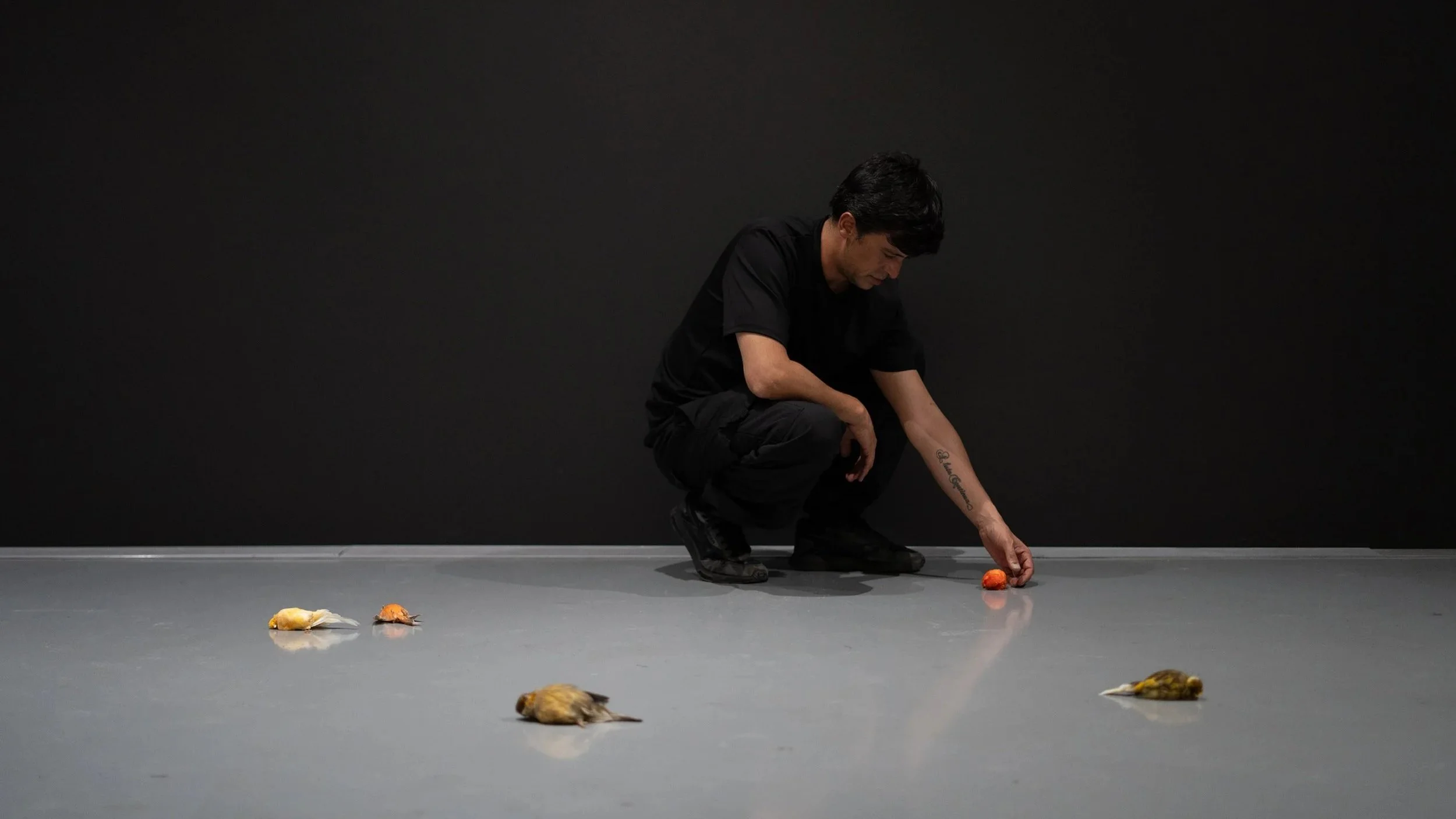
Canary in the Mine
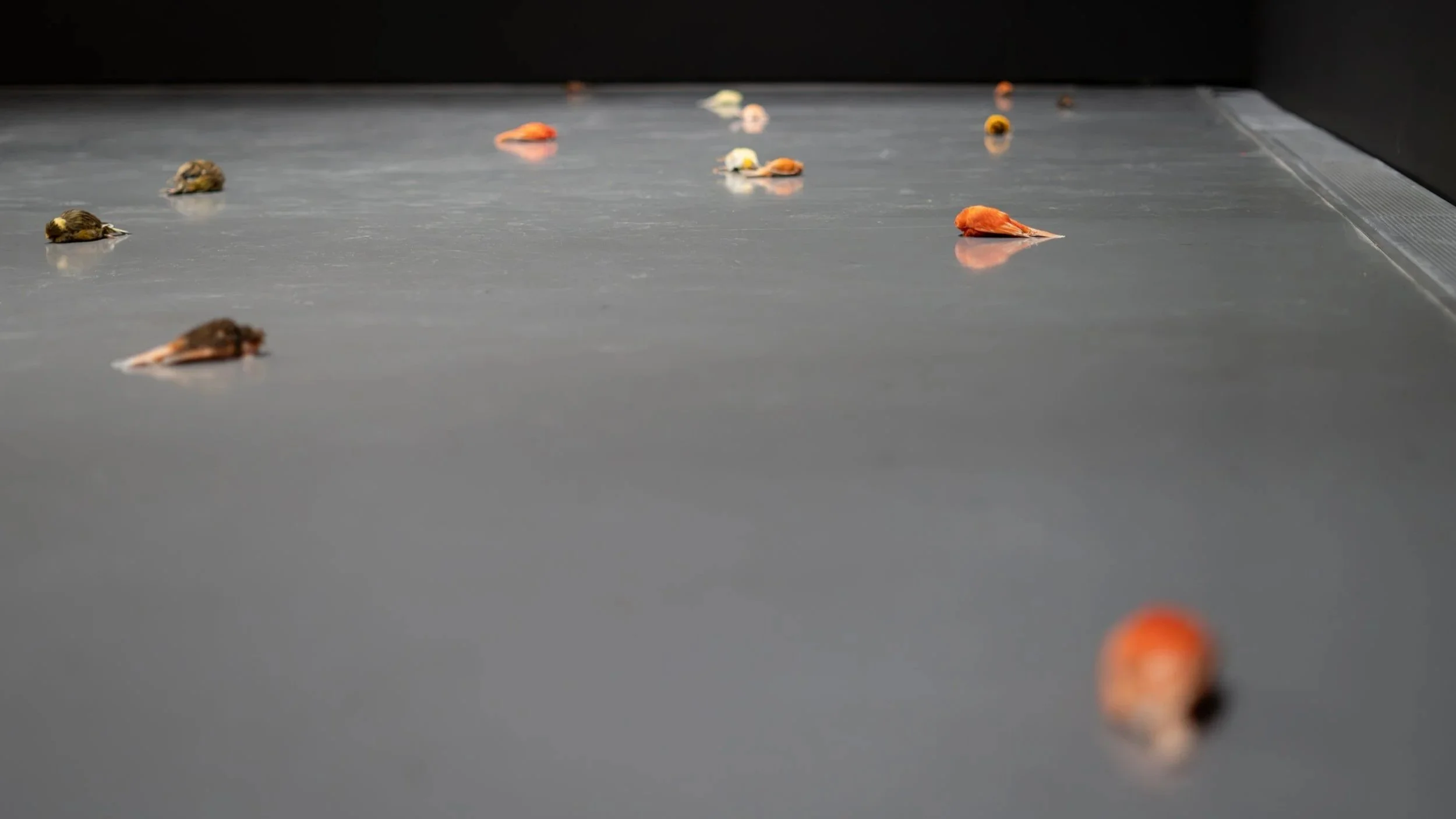
Site-specific installation, taxidermied birds
Installation dimensions variable
Canaries have long served as warnings. Carried into mines, they were used to detect toxic gases that could not be perceived by human senses. Their vulnerability made visible a danger that threatened the lives of those working underground. When a canary showed signs of distress, or collapsed, it signalled that the environment had become unsafe. Its life was made to serve as an instrument of survival for others.
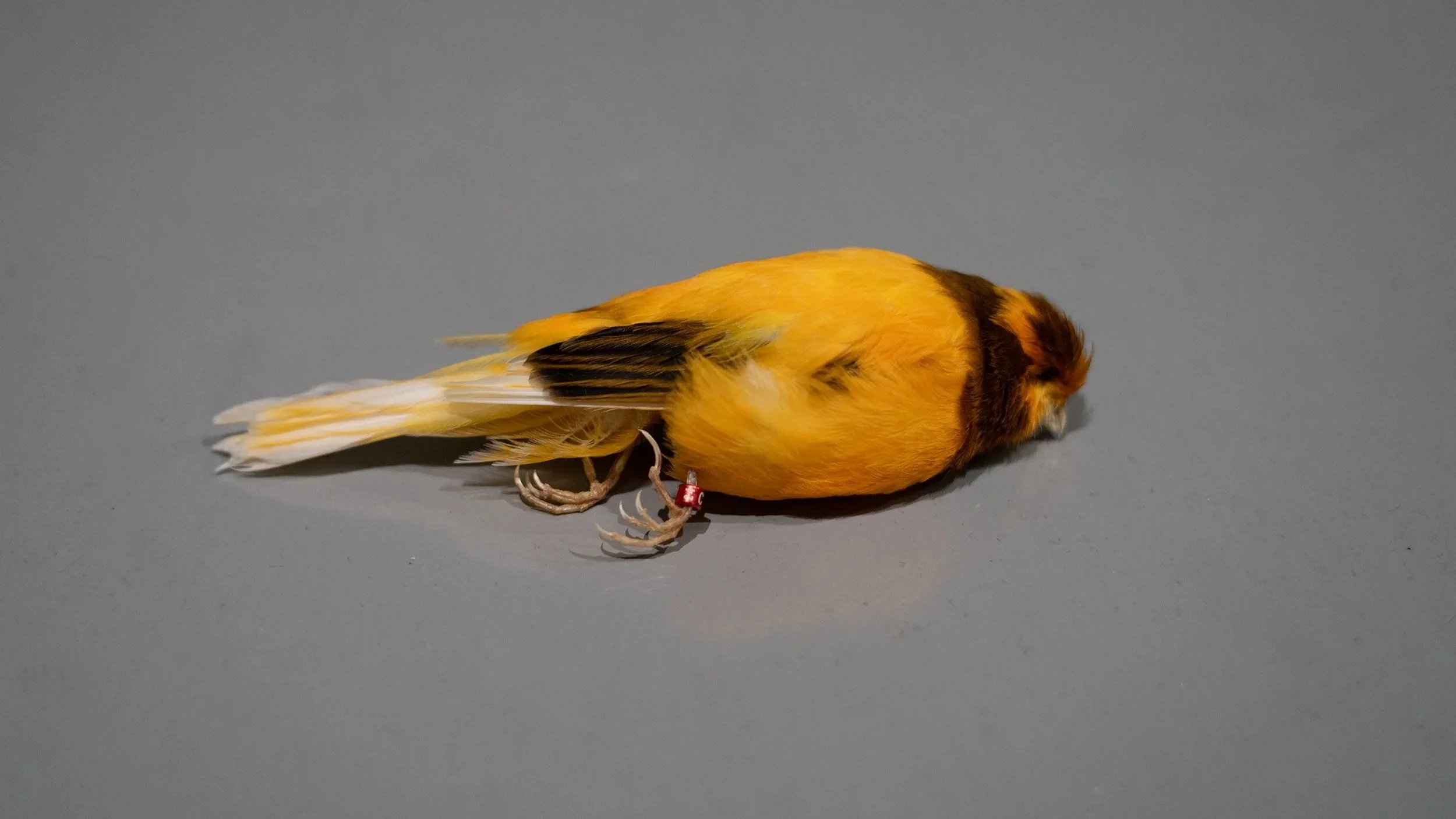
In Canary in the Mine, this historical relationship between vulnerability, warnings and survival becomes the starting point for an installation. A constellation of taxidermied canaries forms a sculptural graveyard, a quiet assembly of bodies whose lives have ended, but continue to carry meaning. Neither a conventional monument nor a natural history display, the installation situates these birds between presence and absence, inviting viewers to consider what their bodies might tell us about the worlds we inhabit and the systems upon which these depend.
The work reflects on the ongoing struggle for a liberated Africa. Across the continent, generations have fought against colonial domination and for the right to determine their own futures. These struggles demanded immense sacrifice, yet the promise of liberation remains unfinished wherever dispossession, inequality and exploitation continue to shape people's realities. Canary in the Mine mourns those who fell in pursuit of freedom and honours those who continue to struggle for justice. The installation looks towards the future these liberation struggles seek to realise, one in which the sacrifices of the past are met not only with remembrance, but with a material transformation of the conditions under which people live.
The canary's warning extends beyond the mine, drawing attention to ecological and political conditions in which harm is overlooked, suppressed or normalised. Across colonial histories and contemporary forms of extractivism, the pursuit of profit has repeatedly depended upon the exploitation of land, labour and natural resources. Those most exposed to harm are often the first to register a crisis that others are unwilling or unable to acknowledge. The canary therefore becomes both witness and warning, making visible the consequences of systems that sacrifice the vulnerable while promising prosperity to others.
The work reflects on the ongoing struggle for a liberated Africa. Across the continent, generations have fought against colonial domination and for the right to determine their own futures. These struggles demanded immense sacrifice, yet the promise of liberation remains unfinished wherever dispossession, inequality and exploitation continue to shape people's realities. Canary in the Mine mourns those who fell in pursuit of freedom and honours those who continue to struggle for justice. The installation looks towards the future these liberation struggles seek to realise, one in which the sacrifices of the past are met not only with remembrance, but with a material transformation of the conditions under which people live.
The canary's warning extends beyond the mine, drawing attention to ecological and political conditions in which harm is overlooked, suppressed or normalised. Across colonial histories and contemporary forms of extractivism, the pursuit of profit has repeatedly depended upon the exploitation of land, labour and natural resources. Those most exposed to harm are often the first to register a crisis that others are unwilling or unable to acknowledge. The canary therefore becomes both witness and warning, making visible the consequences of systems that sacrifice the vulnerable while promising prosperity to others.
The canary also belongs to a broader ecological understanding of sentinel species, living organisms whose vulnerability or sensitivity can indicate changes in their surroundings. Rose bushes, for example, have traditionally been planted alongside grapevines because they may show signs of pests or disease before the vines do. Such relationships suggest forms of knowledge grounded in attention, proximity, care and responsibility. They remind us that environments communicate through subtle changes, and that the capacity to respond depends upon our willingness to notice them.
As an anti-monument, the installation does not seek to resolve loss through permanence or closure. Instead, it gathers the dead as a reminder of lives and worlds affected by systems that too often make their consequences difficult to see. The canaries are no longer able to sound an alarm. Their bodies remain as evidence of vulnerability, but also as an invitation to reconsider how warnings are recognised, and what responsibilities that recognition entails.
The sculptural graveyard is quiet, but its silence is not empty. It calls on us to attend to what is already being communicated through damaged environments, through communities living with the consequences of extraction, and through lives rendered expendable by systems that prioritise profit over care. To heed a warning is not merely to acknowledge danger. It is to take responsibility for the futures we inherit and create.
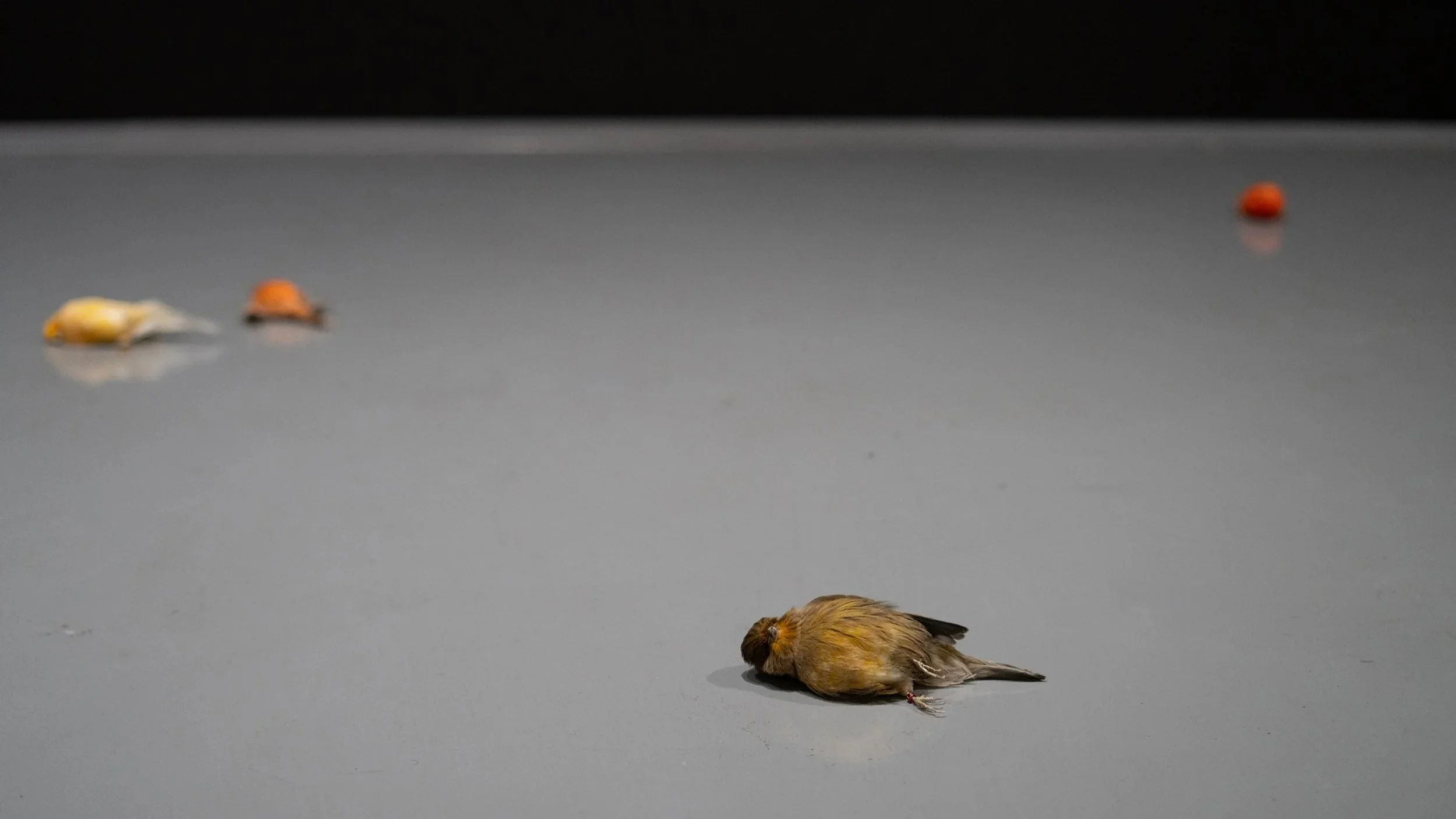
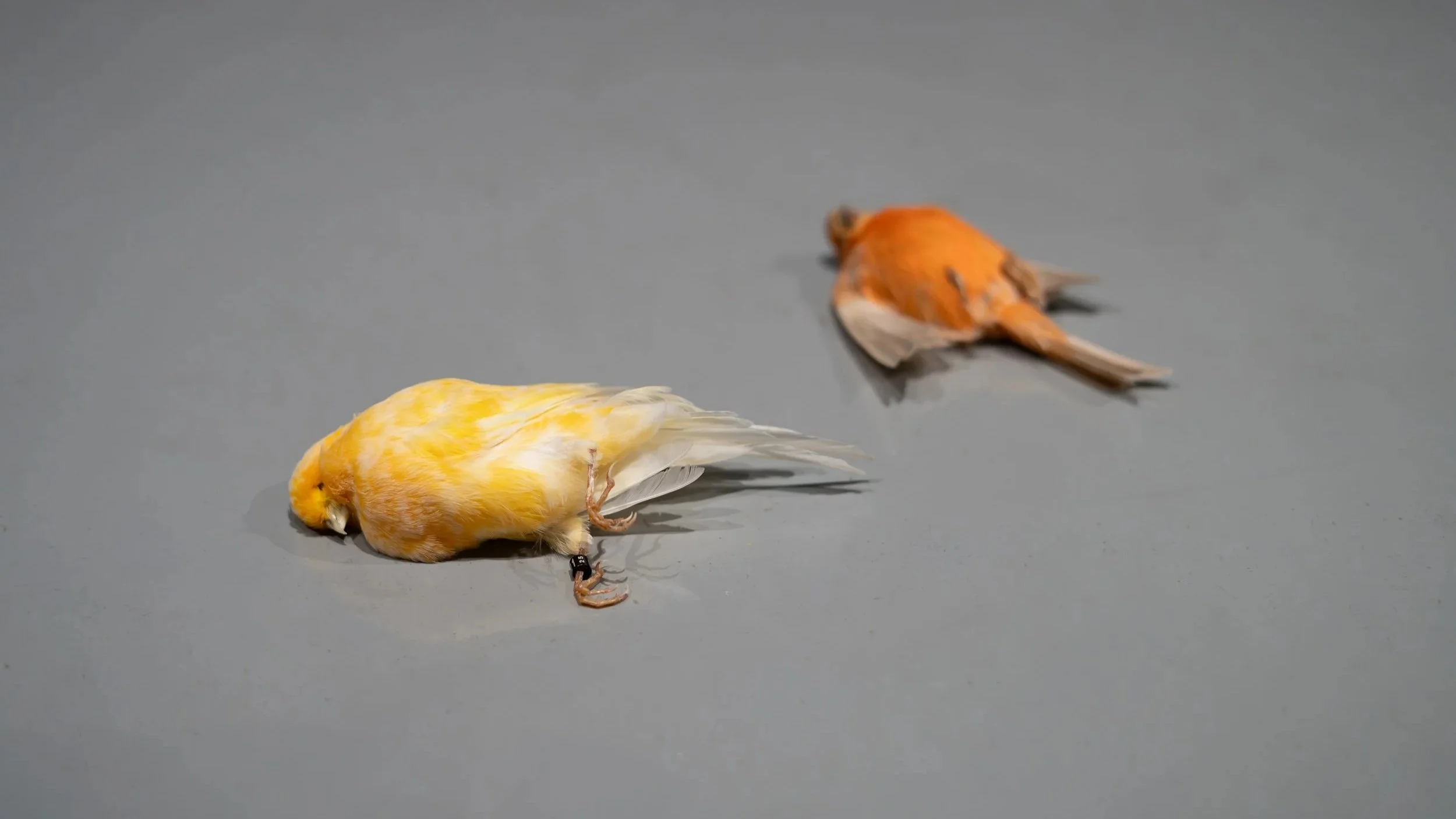
The installation emerges through a process of social intervention that is inseparable from the relationships through which it takes shape. The birds are contributed by breeders who respond to a call for participation circulated through South African canary-breeding networks and online communities. Each bird is received only after its natural death. Contributors provide information about the bird, record consent and help establish the provenance of each specimen.
The first bird to enter the project was a Norwich canary from a breeder in Johannesburg. Born in 2024, it won first place in both national and Gauteng regional championships in 2025. It lived for only two years and, despite its success in competition, had not yet been used for breeding. Its story offered an early glimpse into the worlds that surround these birds, revealing the care, knowledge and attachment invested in them by their owners.
Through conversations with breeders, Gunn-Salie came to understand how closely these relationships are connected to questions of lineage, inheritance and stewardship. The birds arriving through the project bring with them histories of care, attachment and loss that extend beyond their presence within the installation. Given the relatively short lifespan of canaries, breeding often plays a central role in preserving and continuing particular genetic lines. Each specimen carries its own narrative, shaped by the relationships through which it lived and was remembered.
These encounters form an intrinsic part of the work. The call for participation has created relationships and conversations that extend beyond the transfer of a deceased bird. Participants share knowledge, memories and experiences, ensuring that the birds are acknowledged not merely as material components of an artwork, but as lives that held significance within broader networks of care. Their participation is not supplementary to the work, nor simply a means of obtaining its materials. Rather, these exchanges shape the relationships, knowledge and encounters through which the installation is realised.
The identity of Canary in the Mine does not rest solely in a fixed arrangement of specimens. Its conceptual and material framework allows the work to be reconstituted in different contexts, where new participants, local histories and distinct social and political conditions may inform each manifestation. The installation is iterative because the social intervention is ongoing. Its form can change while its central concerns remain, allowing the work to encounter different places without assuming that their histories are interchangeable. Each iteration becomes a specific gathering, shaped by the people, relationships and circumstances through which it comes into being.
This approach builds upon longstanding concerns within Gunn-Salie's artistic and activist practice, including social justice, collective memory, political violence, land, dispossession, extractivism and the possibilities of transformation. Social intervention, often realised through forms of dialogue-based collaboration, has been central to this work, creating encounters and facilitating exchange around contested histories and lived realities.
The project began during Gunn-Salie's 2020–2021 Atelier residency at Zeitz MOCAA. Its development has remained connected to the relationships and conversations that continue to inform his practice, including his relationship with the late Koyo Kouoh, whose belief in the capacity of art to create meaningful encounters continues to resonate within the work.
Canary in the Mine brings these interconnected concerns into a particularly concentrated form. Rather than representing a departure from earlier questions, the project gathers multiple strands of inquiry into a single sculptural proposition. Relationships, participation and exchange become integral to the installation itself, producing a work concerned with how loss is remembered, how warnings are recognised and how responsibility might be shared. Through the accumulation of birds and stories, the installation asks how care might be extended across histories, communities and environments, and what forms of attention become possible when vulnerability is understood as a shared condition.
-
Canary in the Mine welcomes contributions from canary breeders. Birds are accepted only following natural death and with the informed consent of contributors.